Custom Boat Wraps
for Hulls That Turn Heads
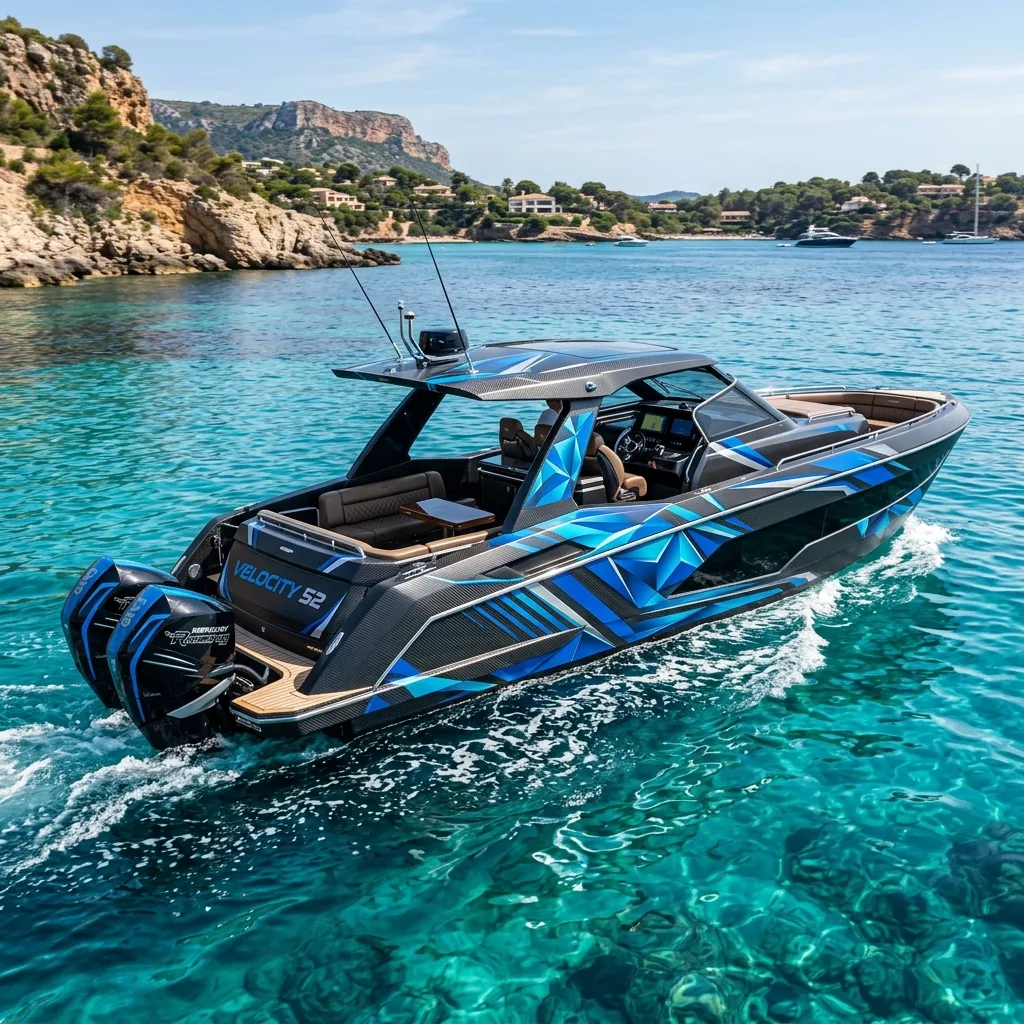
Give a center console, cruiser, pontoon, personal watercraft, or charter vessel a bold custom identity or full color change with marine-grade vinyl. We design around hull curves, rub rails, hardware, non-skid decks, and required registration markings, then print, laminate, and install the graphics in-house in Linden, NJ. Wraps are planned for above-waterline surfaces only.
Marine Vinyl Is a Faster, Reversible Way to Change a Hull
A full marine repaint is expensive, slow, and permanent. A vinyl wrap can restyle topsides, hullsides, the transom, and superstructure with custom color, graphics, or a solid color change, and it can be removed later when the surface underneath is sound. For charter operators, tournament teams, and dealers it is also a way to carry consistent branding and sponsor graphics without committing to paint.
Marine surfaces set the rules, not the artwork. Gelcoat condition, oxidation, wax residue, non-skid texture, deep compound curves, rub rails, hardware, vents, and repaired areas all decide what can be wrapped and how. Vinyl is an above-waterline product: running surfaces, antifouling areas, and anything that stays submerged are not wrap candidates and belong to marine coatings.
Required markings stay separate from styling. Registration numbers, validation decals, a documented vessel's name and hailing port, and any other mandated information remain the owner's responsibility, and we plan the layout to preserve or incorporate the areas you confirm with the proper authorities.
Graphics for Powerboats, Pontoons and Personal Watercraft
Every vessel is reviewed by its construction, surface condition, hardware, deck layout, and required markings — not just its size.
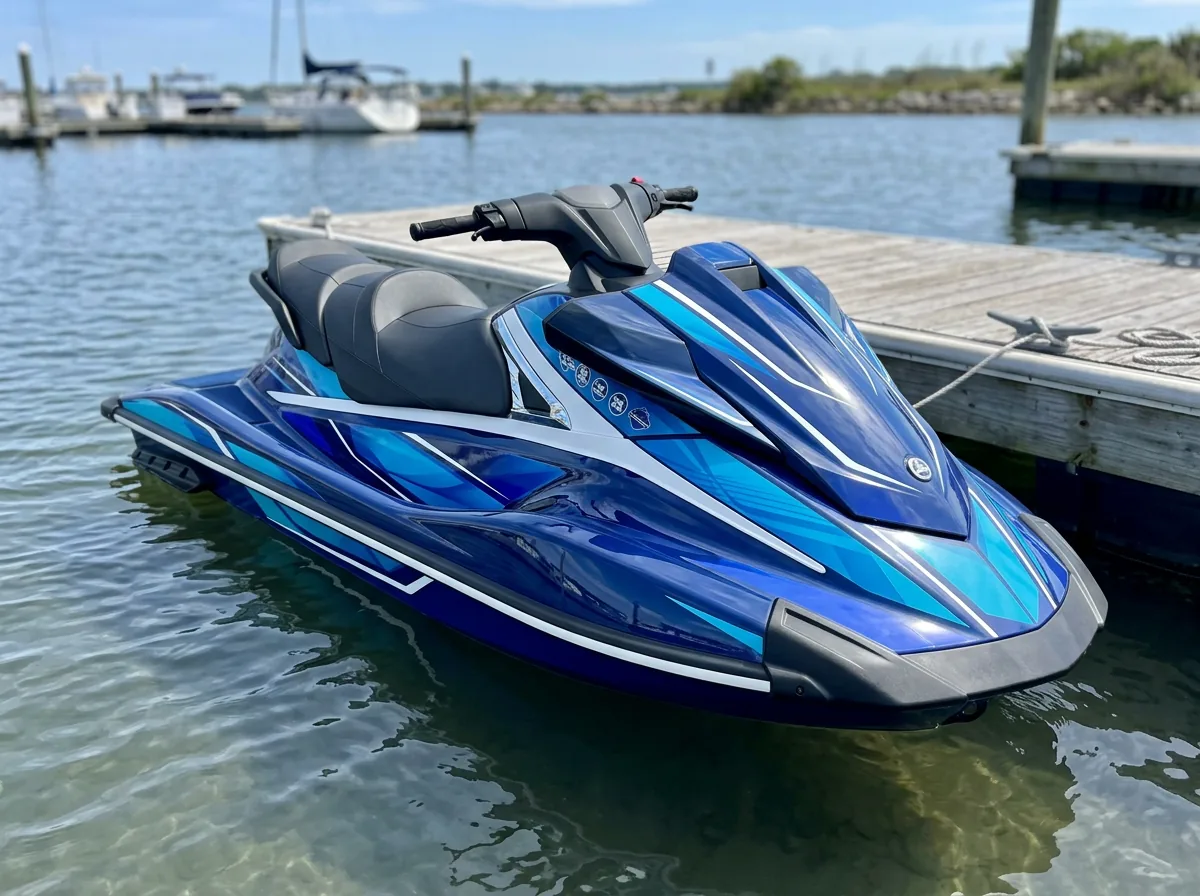
Personal Watercraft (PWC)
Jet skis and stand-up craft with tight compound curves, cowlings, seats, and grab rails.
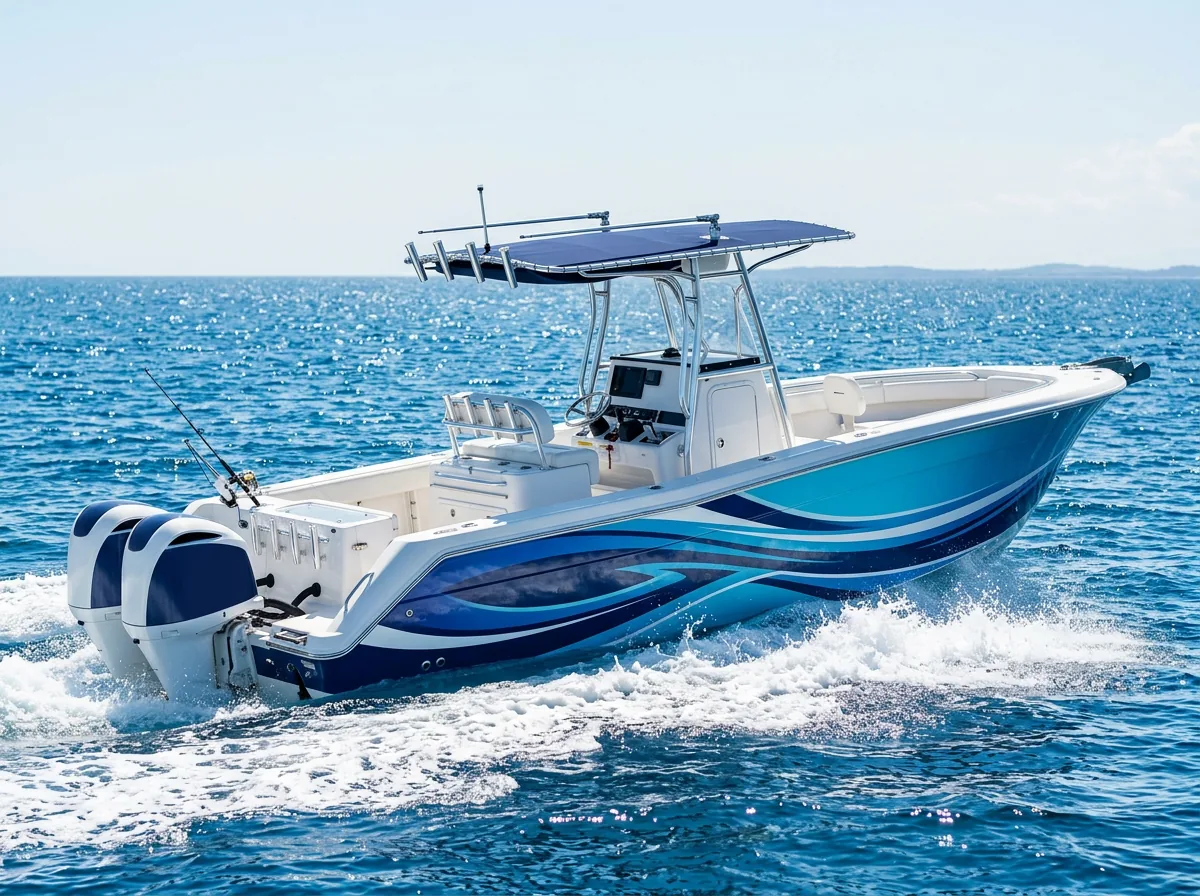
Center Console / Sport Boat
Fishing and sport hulls with long hullsides, a transom, and a console or hardtop.
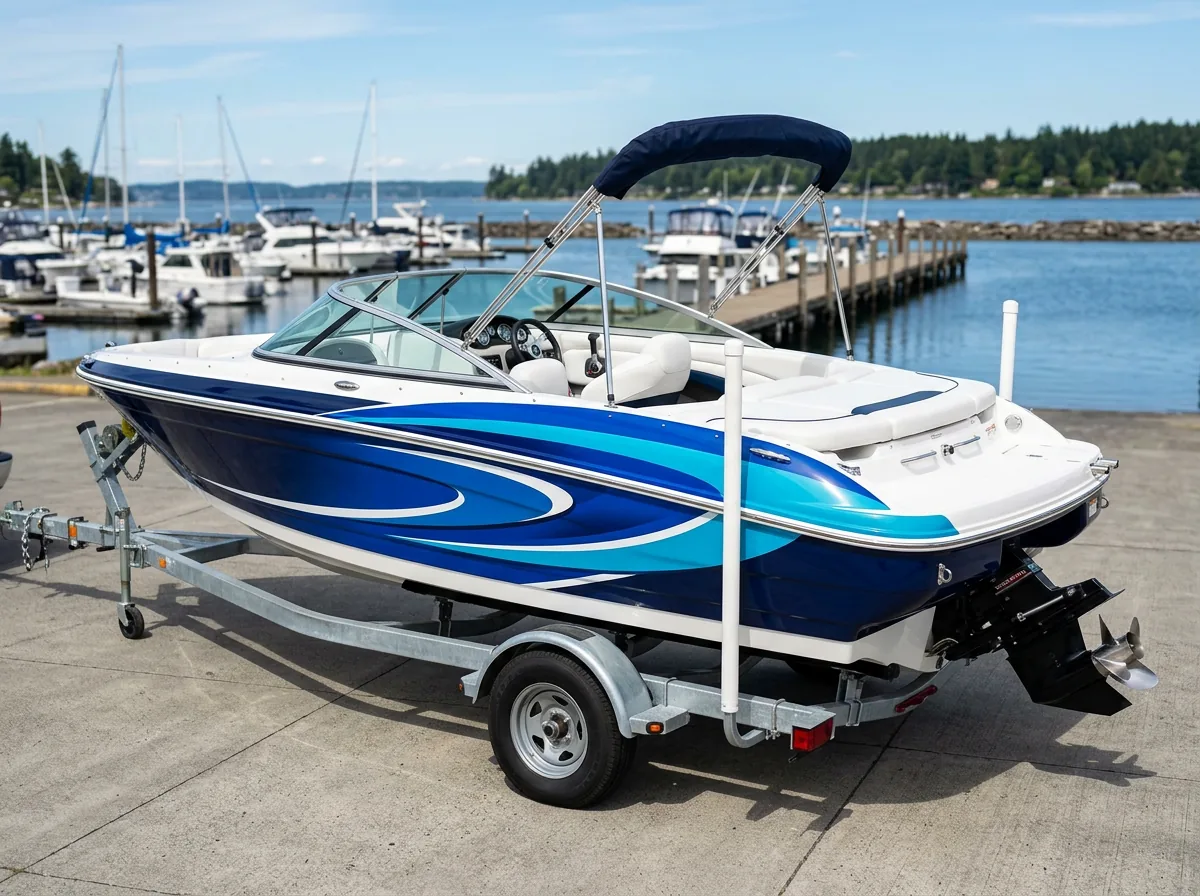
Bowrider / Runabout
Trailerable day boats with topside graphics and frequent dock and trailer contact.
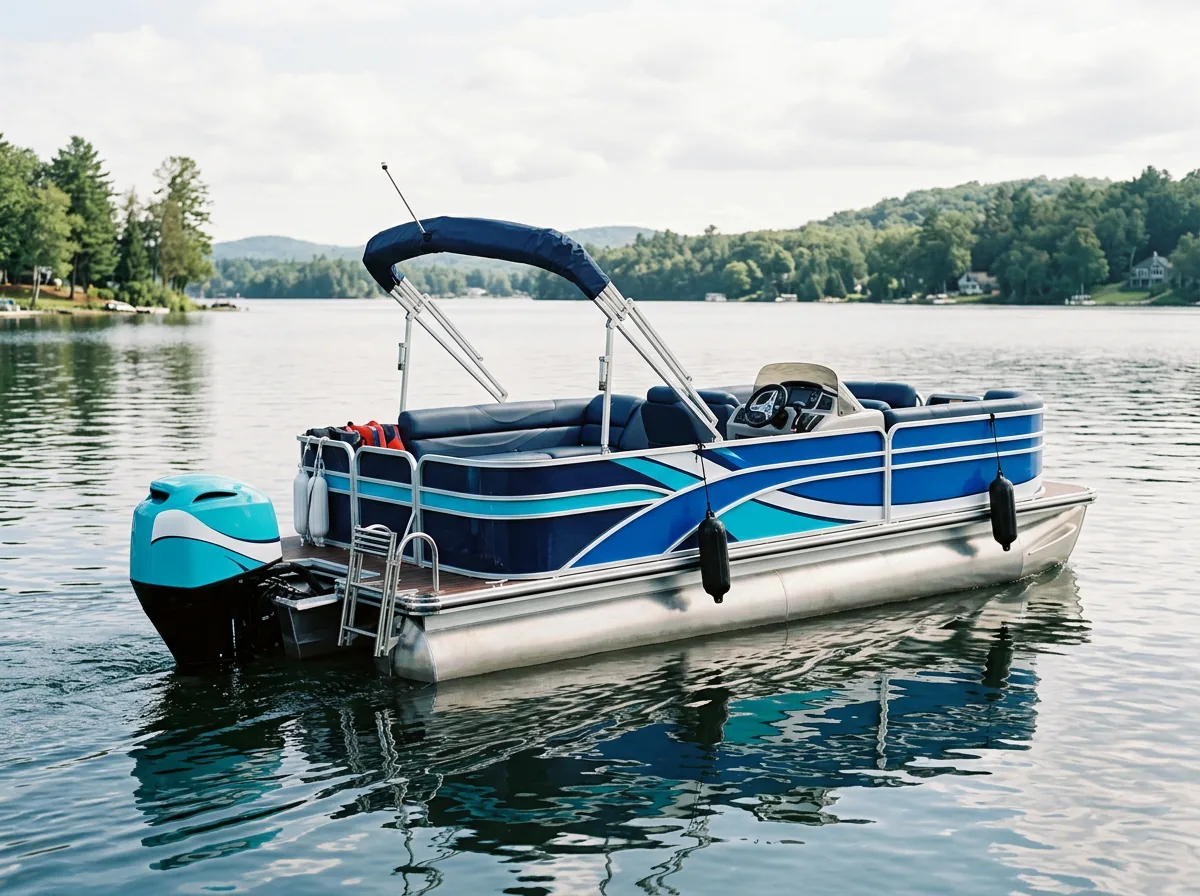
Pontoon / Deck Boat
Flat fence panels, motor pods, and accent bands on aluminum-railed platforms.
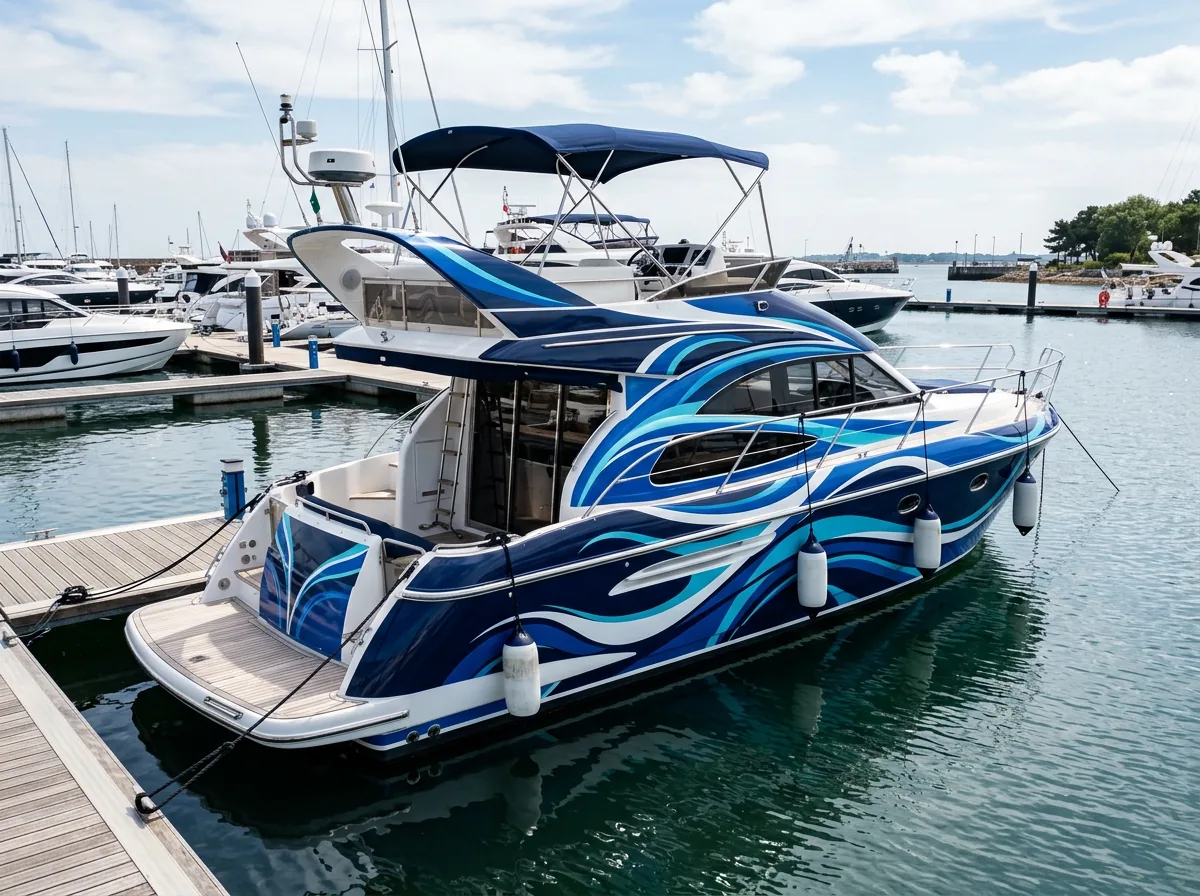
Cabin Cruiser / Yacht
Larger vessels with topsides, hullsides, and superstructure to coordinate.
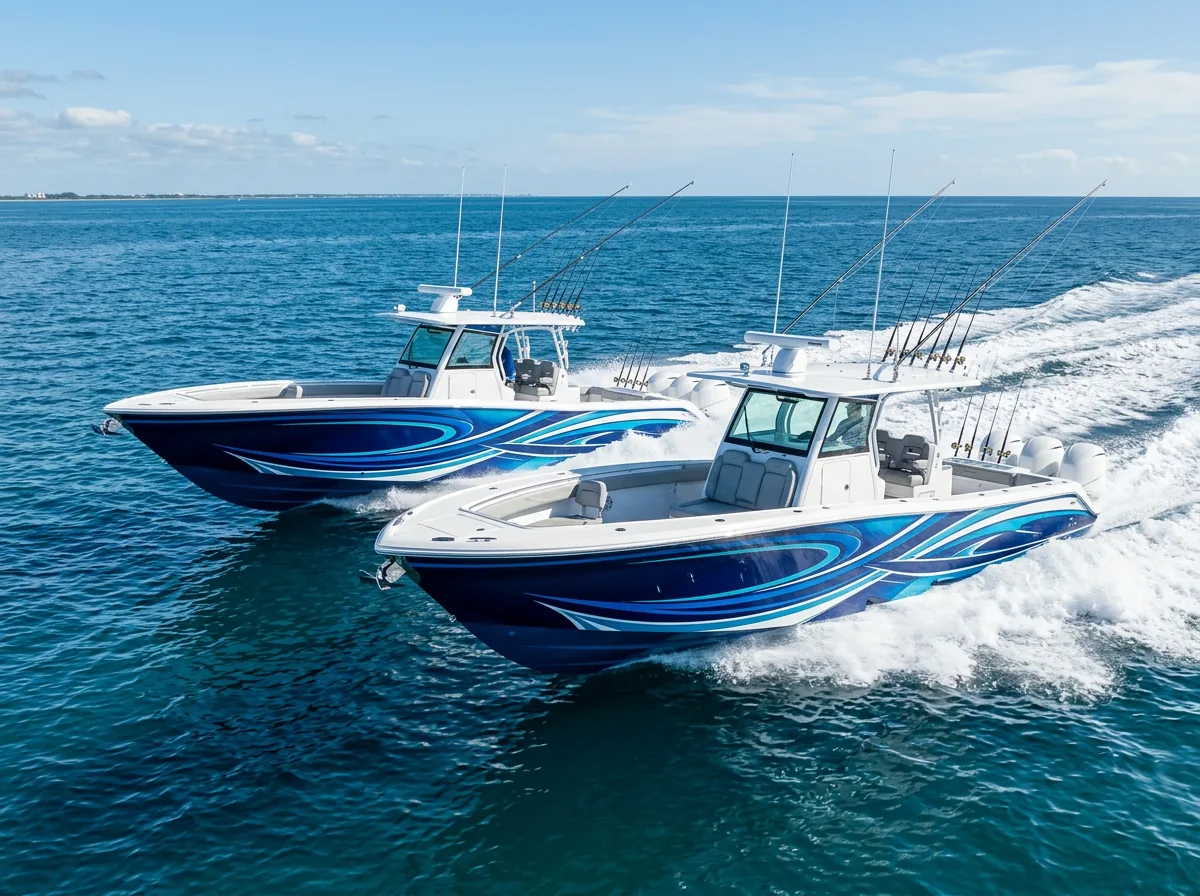
Charter / Tournament Fleet
Multiple boats carrying one brand plus sponsor and contact graphics.
Give Every Surface a Clear Job
Build the design from on-the-water recognition down to dock-level detail, while preserving hardware, non-skid, and every required marking.
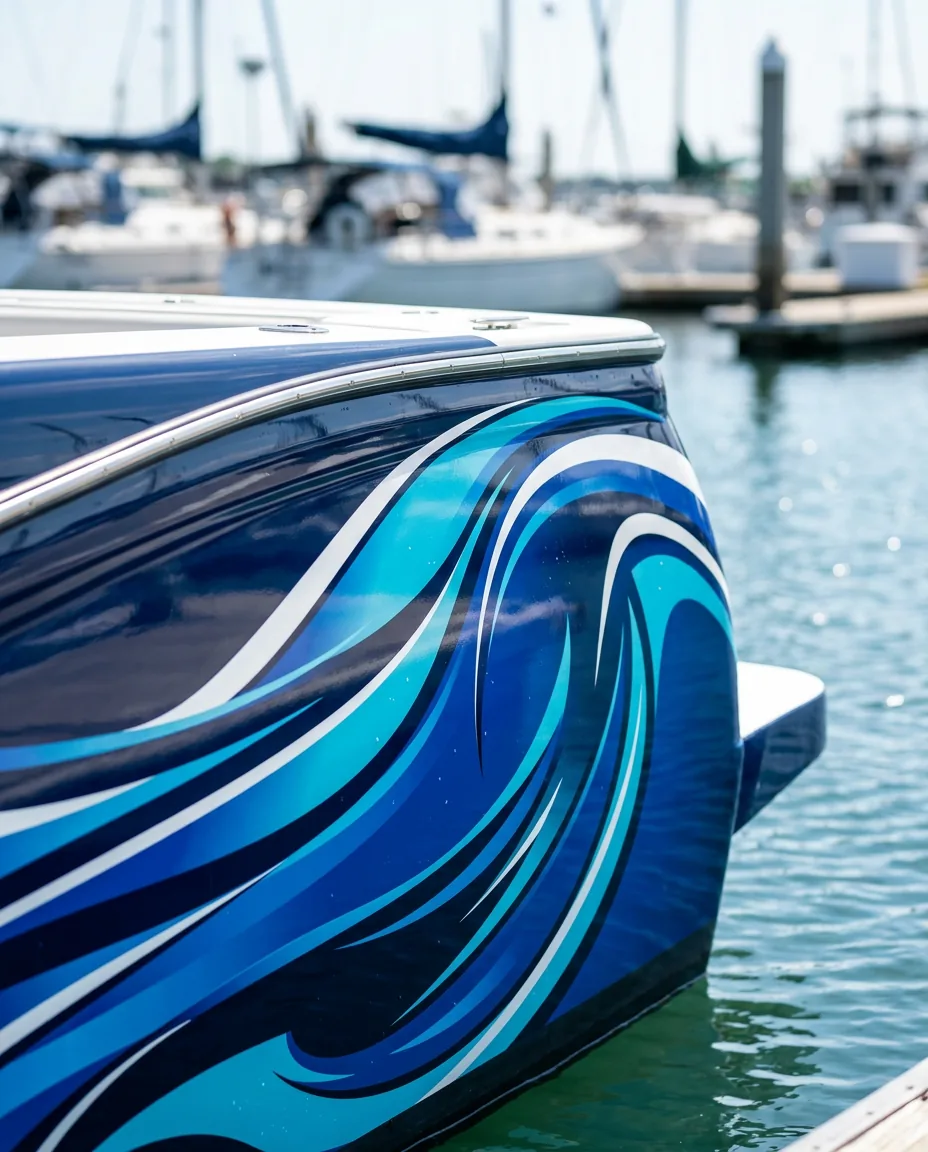
1Hullside Identity
The long hullside is the primary canvas. Use it for the boat name, team, brand, or a bold color scheme that reads on the water and at the dock, planned around the sheer line, rub rail, and hardware.
2Transom Focal Point
The transom is the most-photographed panel and, for documented vessels, carries the name and hailing port. Keep required text legible and preserve the areas you confirm with the authorities.
3Required Registration Zones
State registration numbers, validation stickers, and other mandated markings must remain the correct size, contrast, and placement. The owner supplies the confirmed requirements and the layout protects those zones.
4Superstructure & Hardtop
Consoles, hardtops, and cabin sides can extend the color scheme, but vents, electronics, antennas, seals, and access hatches need to stay clear and serviceable.
5Sponsor & Contact Information
For charter, tournament, or dealer boats, sponsor logos, a phone number, website, or booking handle can be added — accurate, authorized, and kept secondary to the vessel identity.
6Protected Surfaces
Non-skid decks, running surfaces, below-waterline areas, and heavily flexing or sealed components are left out of the wrap. Coverage stops where vinyl is not the right material.
Boat Wrap Cost Factors
Length is only one variable. Hull shape, surface condition, hardware, coverage, artwork, and haul-out or transport logistics also shape the scope.
| Vessel Type | Typical Wrap Areas | Quote Considerations |
|---|---|---|
| Personal watercraft (PWC) | Hull sides, deck accents, and cowling | Compound curves, seat and grab-rail clearances, hardware, and hours of sun and water exposure |
| Center console / sport boat | Hullsides, transom, and console accents | Length, gelcoat condition, rub rails, hardware, non-skid, and required registration areas |
| Bowrider / runabout | Hullsides, transom, and topside graphics | Trailering wear, dock rash, seam layout, and existing finish or oxidation |
| Pontoon / deck boat | Fence panels, motor pod, and accent bands | Panel material, rails, gates, fasteners, and flat-panel replacement vs. wrap |
| Cabin cruiser / yacht | Topsides, hullsides, and superstructure | Vessel size, access and staging, haul-out, surface repairs, and documented-vessel markings |
| Charter / tournament fleet | Coordinated hull and sponsor graphics | Vessel roster, brand system, mixed hull shapes, and per-boat production files |
Send clear photos of the hull in and out of the water, overall length and beam, close-ups of the gelcoat, rub rails, hardware, and any oxidation or repairs, old-graphic condition, the coverage you want, your registration and documentation requirements, vessel quantity, storage situation, and target date. We will recommend appropriate surfaces and quote the actual scope rather than applying a universal per-foot price.
From Hull Review to Water-Ready Install
Vessel & Surface Review
We review length, hull shape, gelcoat or paint condition, oxidation, non-skid, hardware, deck layout, existing graphics, and transport. The owner identifies required registration and documentation markings and any protected surfaces.
Design Plan & Proof
The layout assigns clear roles to hullside identity, the transom, required markings, and sponsor or contact information. Proofs reflect the actual vessel, and production follows written approval.
Material Selection & Production
We select marine-appropriate cast films and laminates based on the approved surfaces, curvature, sun and water exposure, and manufacturer guidance, then print, laminate, finish, and stage the graphics in-house.
Prep, Installation & Review
Approved surfaces are cleaned, decontaminated, and prepared in a controlled shop environment, then graphics are installed around hardware, non-skid, and clear zones. The owner completes any required marking check before the boat returns to the water.
Boat Wrap FAQs
Can you wrap the part of the hull that sits below the waterline?
Will a wrap stick to gelcoat and fiberglass?
Do I still have to display my registration numbers and name?
How long does a boat wrap last in salt water and sun?
Do you wrap the boat at the marina or does it come to you?
Can a wrap be removed later without damaging the gelcoat?
Can you match a wrap across a fleet of charter or rental boats?
Get a Boat Wrap Quote
Tell us about the vessel, length, hull condition, coverage, existing graphics, registration and documentation requirements, storage, and target date. Photos of the hull in and out of the water help us review the scope.