Residential Cleaning
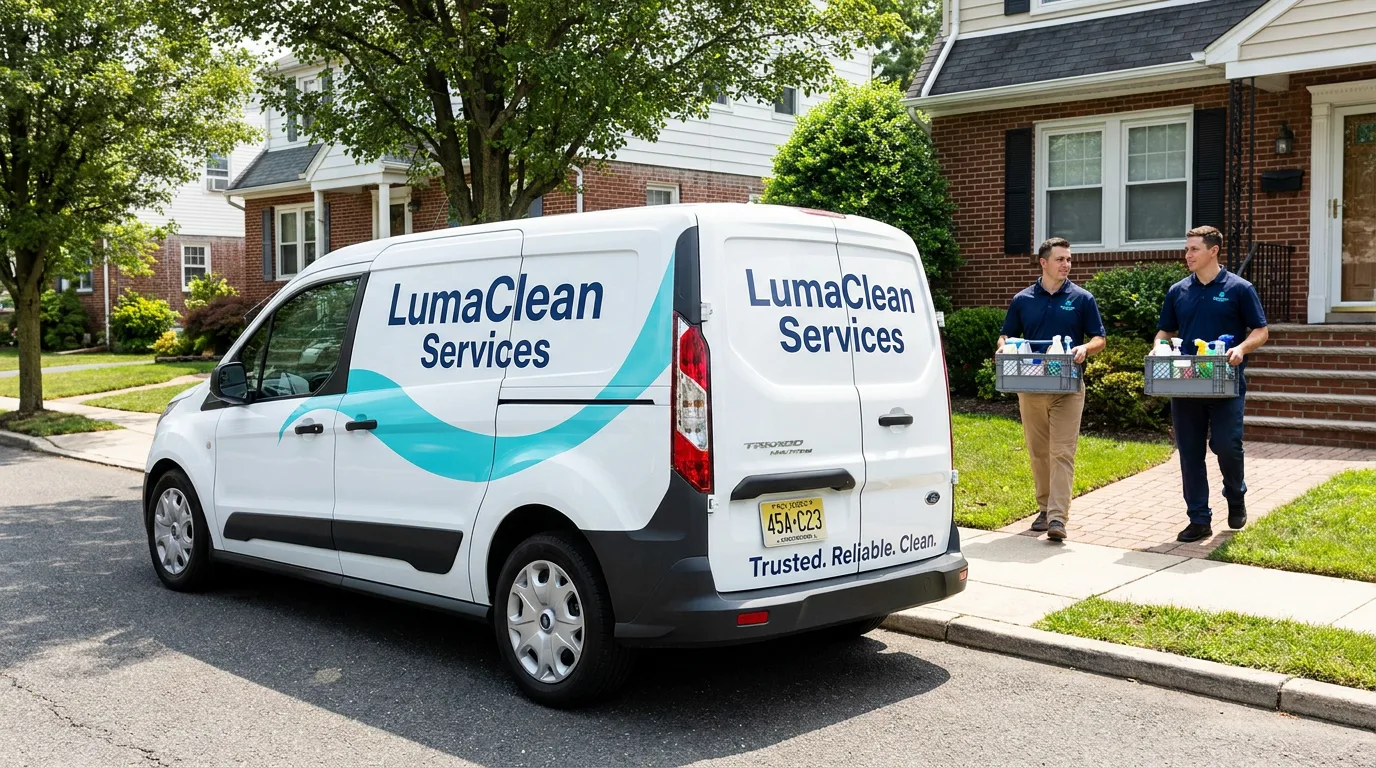
Compact cars, SUVs, and vans benefit from a calm brand, readable service category, and a simple booking path.
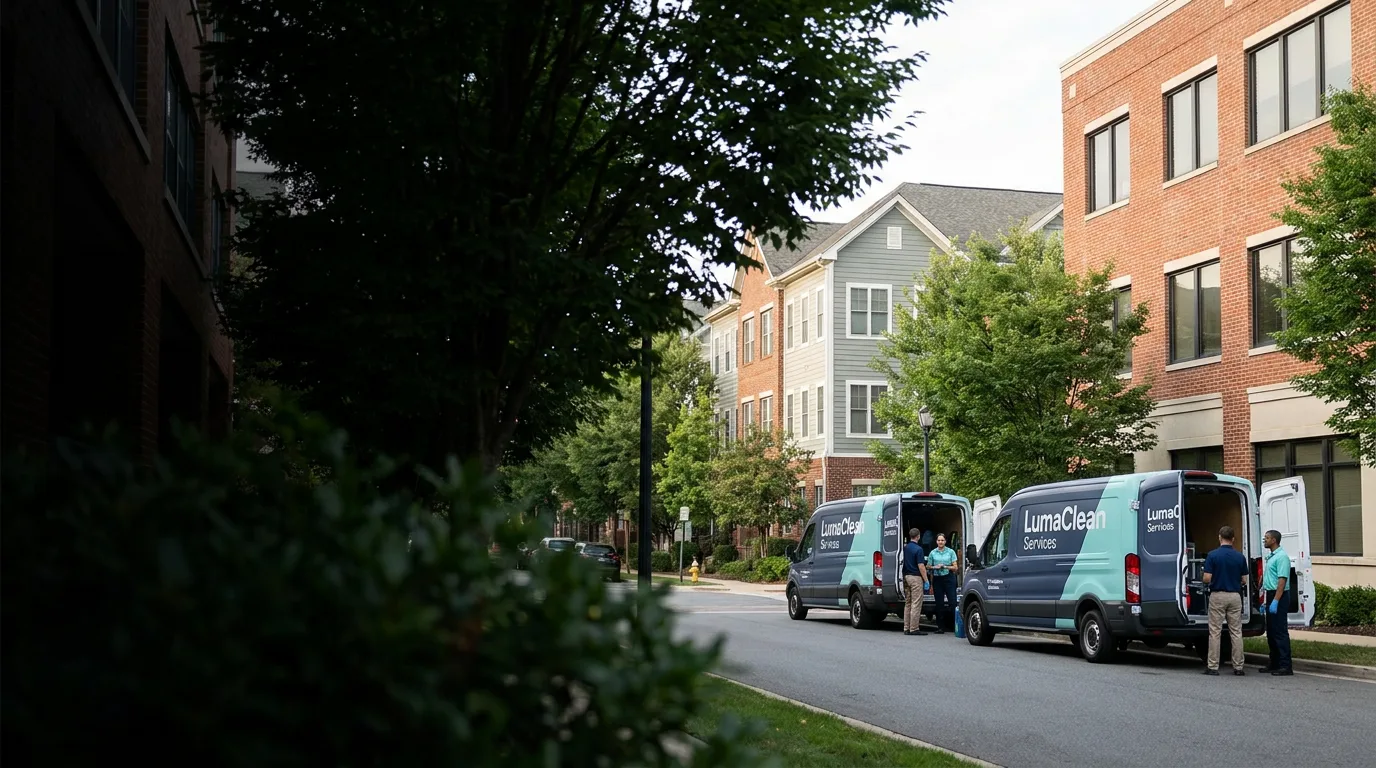
Build recognizable vehicle graphics for residential cleaning, commercial janitorial, carpet care, window cleaning, pressure washing, and property-service teams—without burying the brand under a long service list.
Cleaning teams often work at homes, offices, apartment buildings, retail sites, and managed properties where the vehicle is part of the first impression. A clear identity helps the customer connect the arriving crew with the company they booked.
The design should answer three questions quickly: who is here, what kind of cleaning do they provide, and how can the next customer respond? Everything else earns its place only if it stays readable.
Claims, certifications, license numbers, insured or bonded language, guarantees, and partner badges must be supplied and approved by the business. We design the hierarchy; the operator owns the accuracy and authorization of the content.
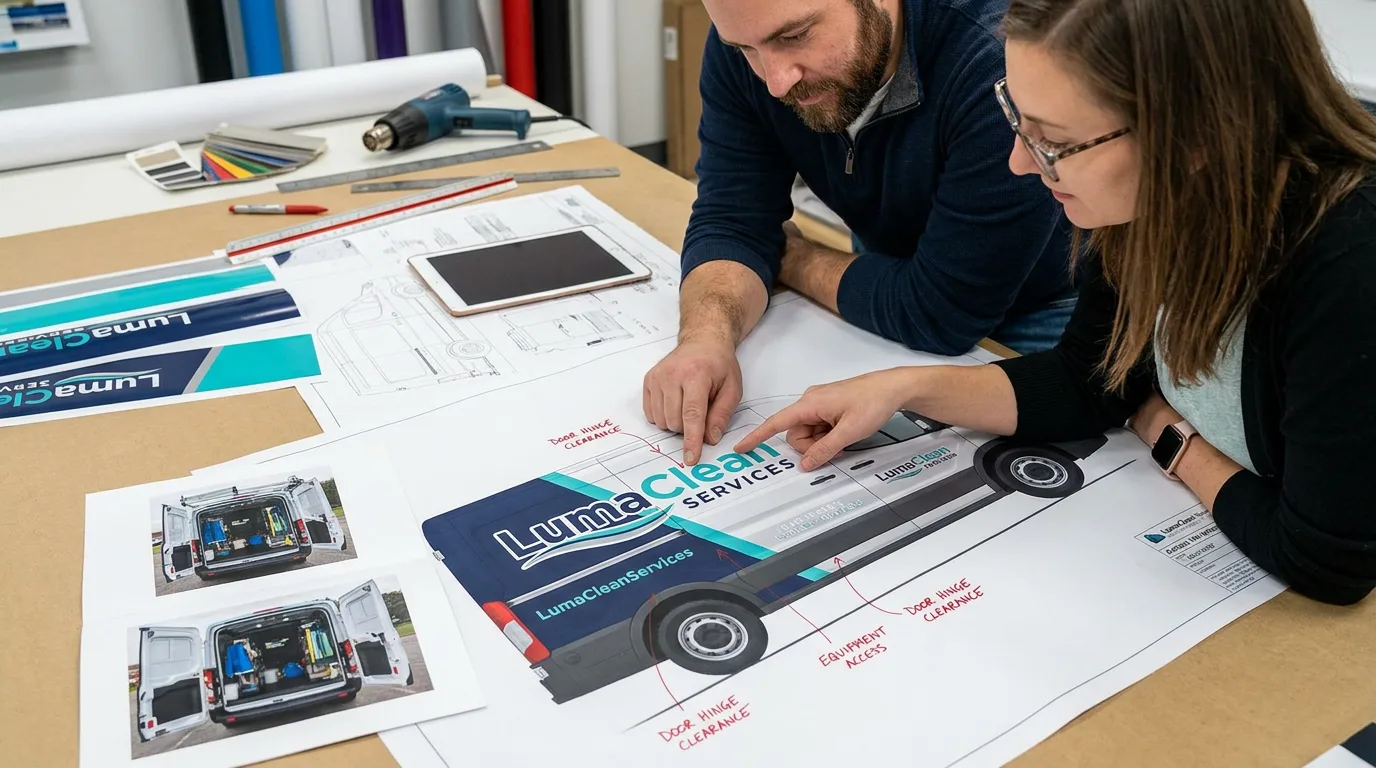
Adapt one brand system to the vehicle's role, equipment, ownership, and daily route.
Compact cars, SUVs, and vans benefit from a calm brand, readable service category, and a simple booking path.
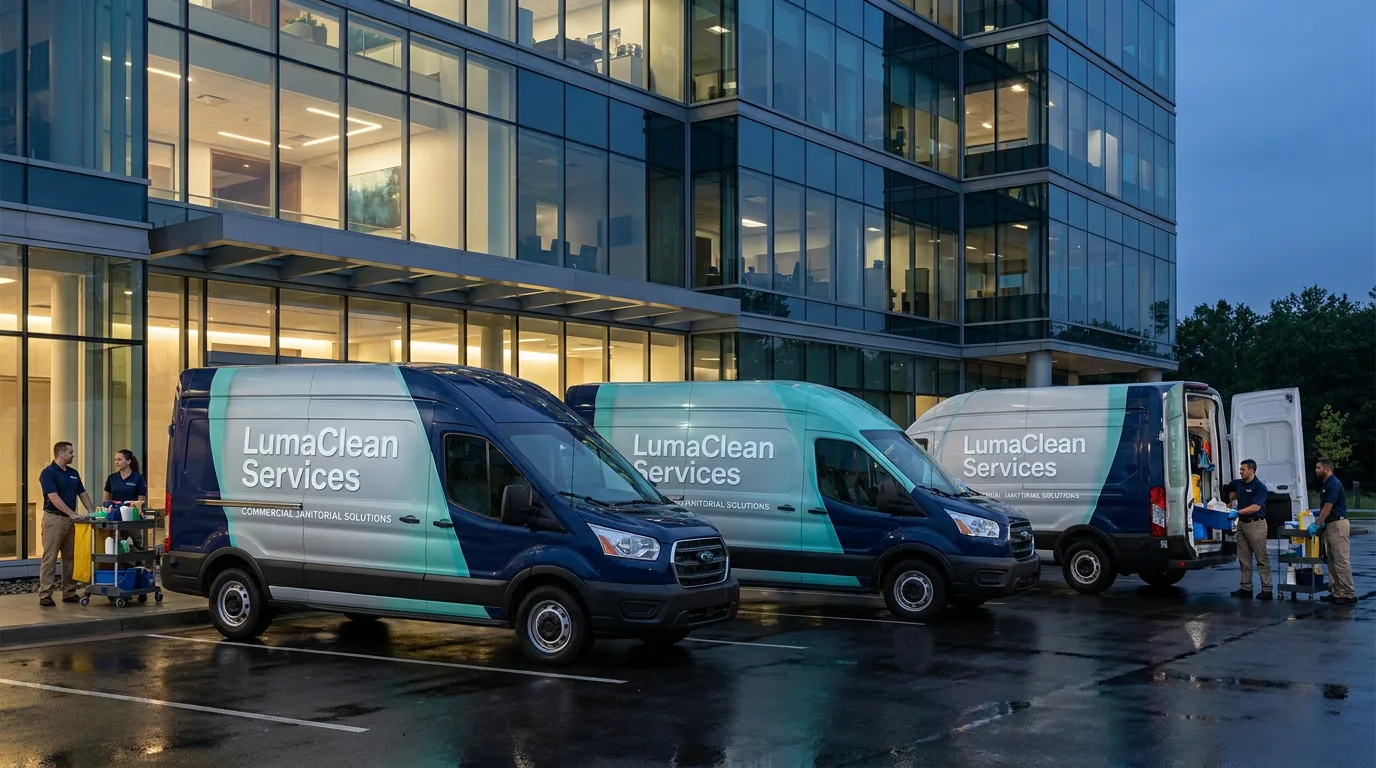
Repeatable van and fleet graphics support scheduled work at offices, retail sites, schools, and managed properties.
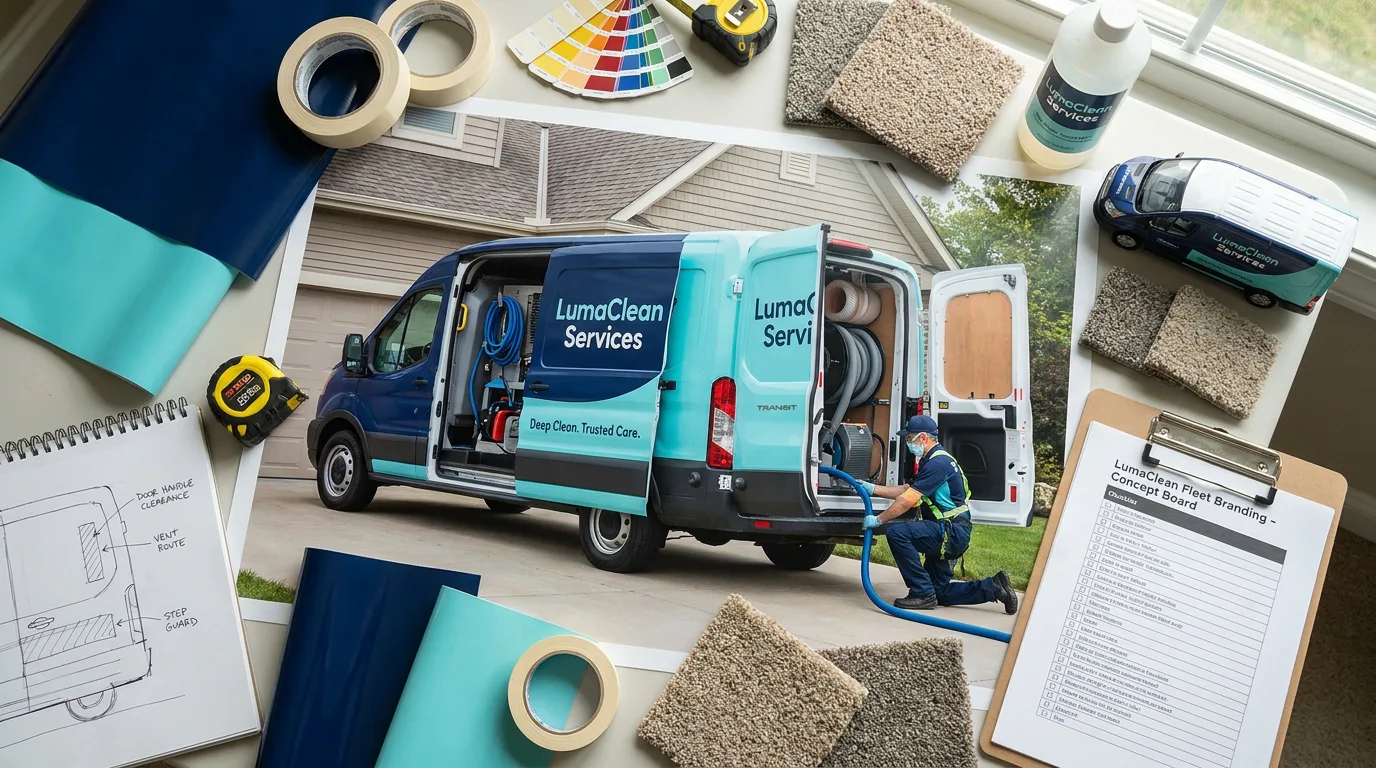
Layouts work around hose access, doors, equipment, ventilation, steps, and the service sequence at the property.
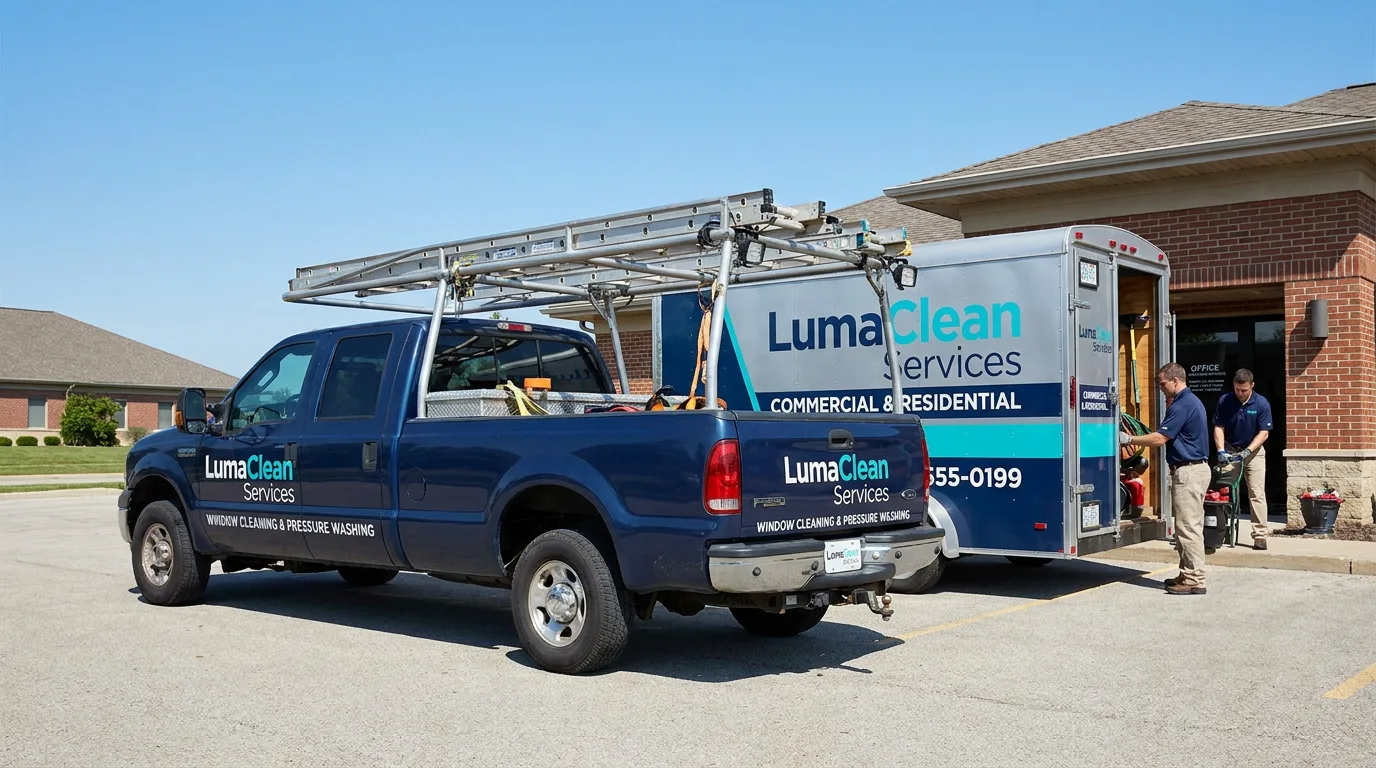
Pickups, vans, racks, and trailers can share one system while keeping tools, tie-downs, doors, and safety hardware usable.
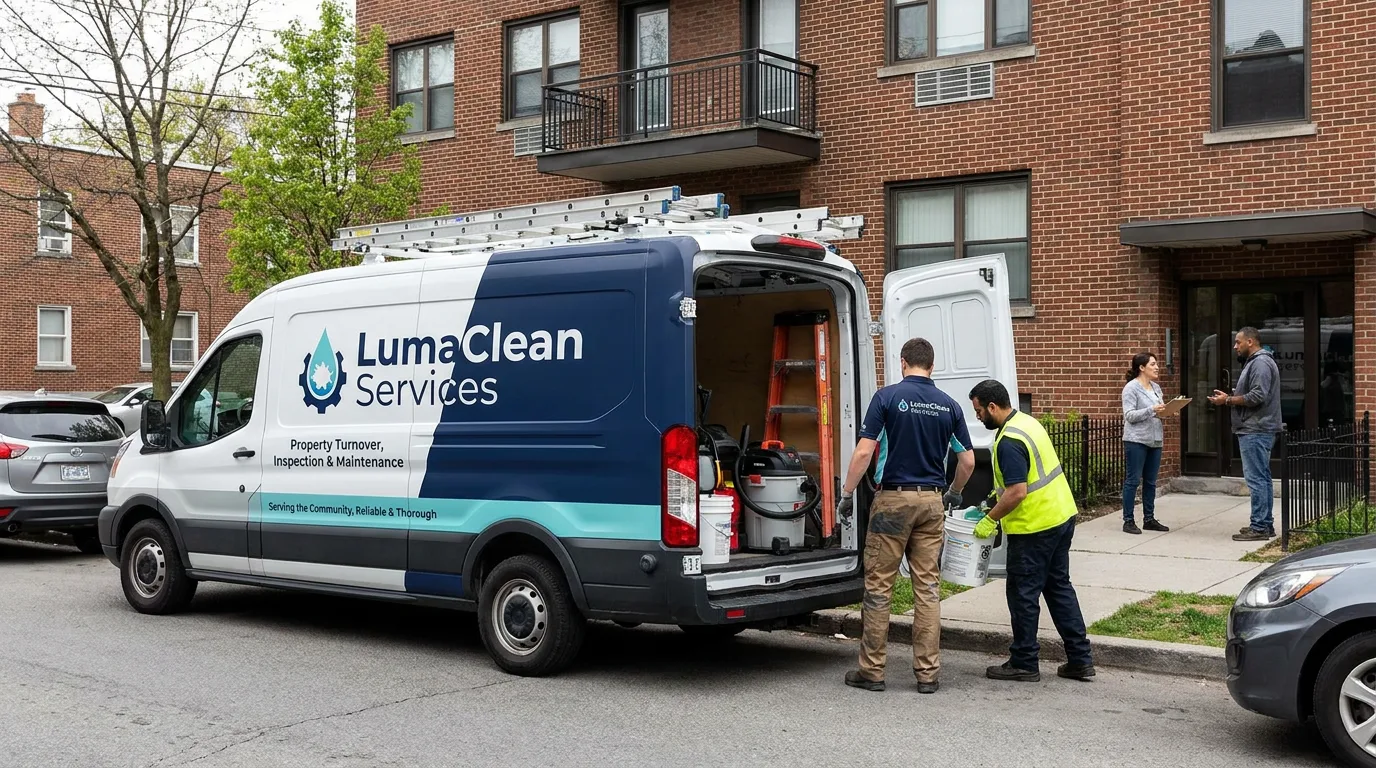
Give maintenance, inspection, and cleaning teams a consistent identity across mixed vehicles and managed locations.
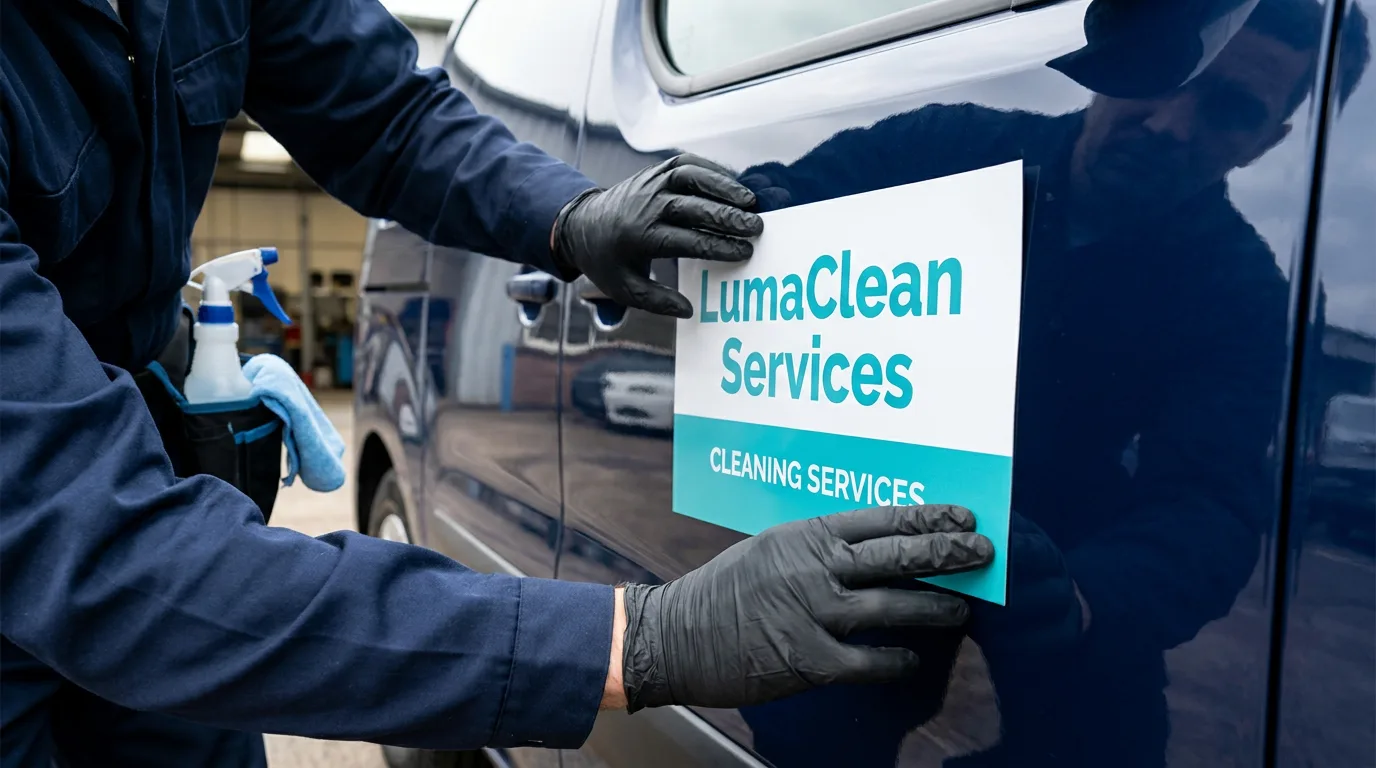
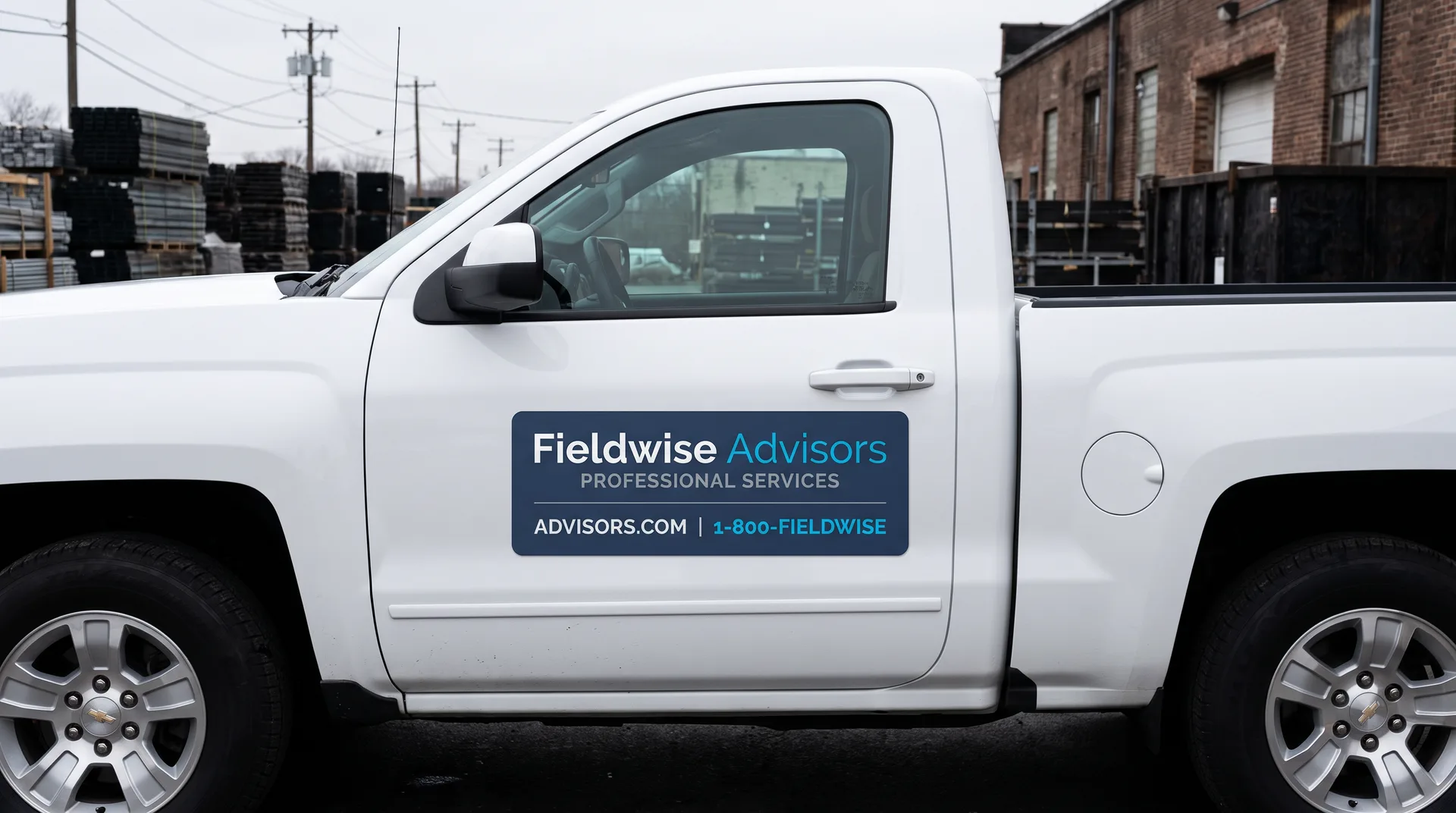
For verified compatible panels, magnetic signs can provide removable identity without pretending to be a universal vehicle solution.
Name, color, and a distinctive visual cue should remain recognizable across every vehicle size.
Use direct language such as residential cleaning, commercial janitorial, carpet care, or exterior cleaning.
Prioritize a booking URL, phone number, or another useful action instead of giving every contact channel equal weight.
Use the rear for traffic viewing: brand, category, and action—not a duplicate of every side-panel detail.
Build around racks, hoses, tanks, ladders, cameras, handles, and how the crew actually opens and loads the vehicle.
Only include claims, badges, credentials, or guarantees the business has confirmed are current and authorized.
Creates the broadest visual change and can unify vehicles with different factory colors after each surface is inspected.
Uses strategic printed coverage and the vehicle color as part of the composition for a strong branded silhouette.
Delivers direct business identification and operational information with a lighter visual and production scope.
Offer removable identification only when panel material, shape, condition, fit, care, and driving use are compatible.
Documents brand zones, variants, unit information, and files so new vehicles can join without redesigning from zero.
Starts with inspection because film history and the paint or repair condition below cannot be guaranteed in advance.
Record vehicle details, ownership, equipment, current condition, fleet variants, brand files, and operational deadlines.
Prioritize brand, cleaning category, response path, approved trust content, and unit or owner-supplied identifiers.
Review the layout on the correct vehicle, including doors, racks, equipment access, cameras, body lines, and rear visibility.
Print, laminate, install, and retain approved production information for replacements or future fleet additions.
Share the fleet, coverage, equipment, and brand information that should shape the graphics.